Modern car engine bay under an open bonnet

Mobile Diagnostics · UK Wide

TPMS Reset & Programming. Fixed quote · Mobile

TPMS warning light on, a new sensor not pairing or a winter-wheel set unrecognised? Mobile TPMS reset, sensor programming and ID-clone on your driveway for a fixed quote. All UK platforms supported. Fixed price agreed before work.

Arrival estimate confirmed with your quote

  • Fixed quote before any work
  • Mobile service

Available 24/7 for emergency auto locksmith callouts. Scheduled remapping, diagnostics and non-emergency appointments are booked 08:00–20:00.

We come to you
Home, work or roadside
Quoted ETA
Arrival estimate with every quote
Non-destructive
Entry & key work
Pro equipment
Key & ECU programming
Fixed quote
Agreed before we attend

Get a vehicle-specific quote

Start with your registration — we'll fill in the vehicle details.

Step 1 of 4Vehicle

  1. Vehicle — to do
  2. Service — to do
  3. Location — to do
  4. Details — to do

Vehicle

Enter your UK registration to identify your vehicle

TPMS Reset & Programming — mobile diagnostic service on your driveway

How we handle mobile diagnostics · uk wide

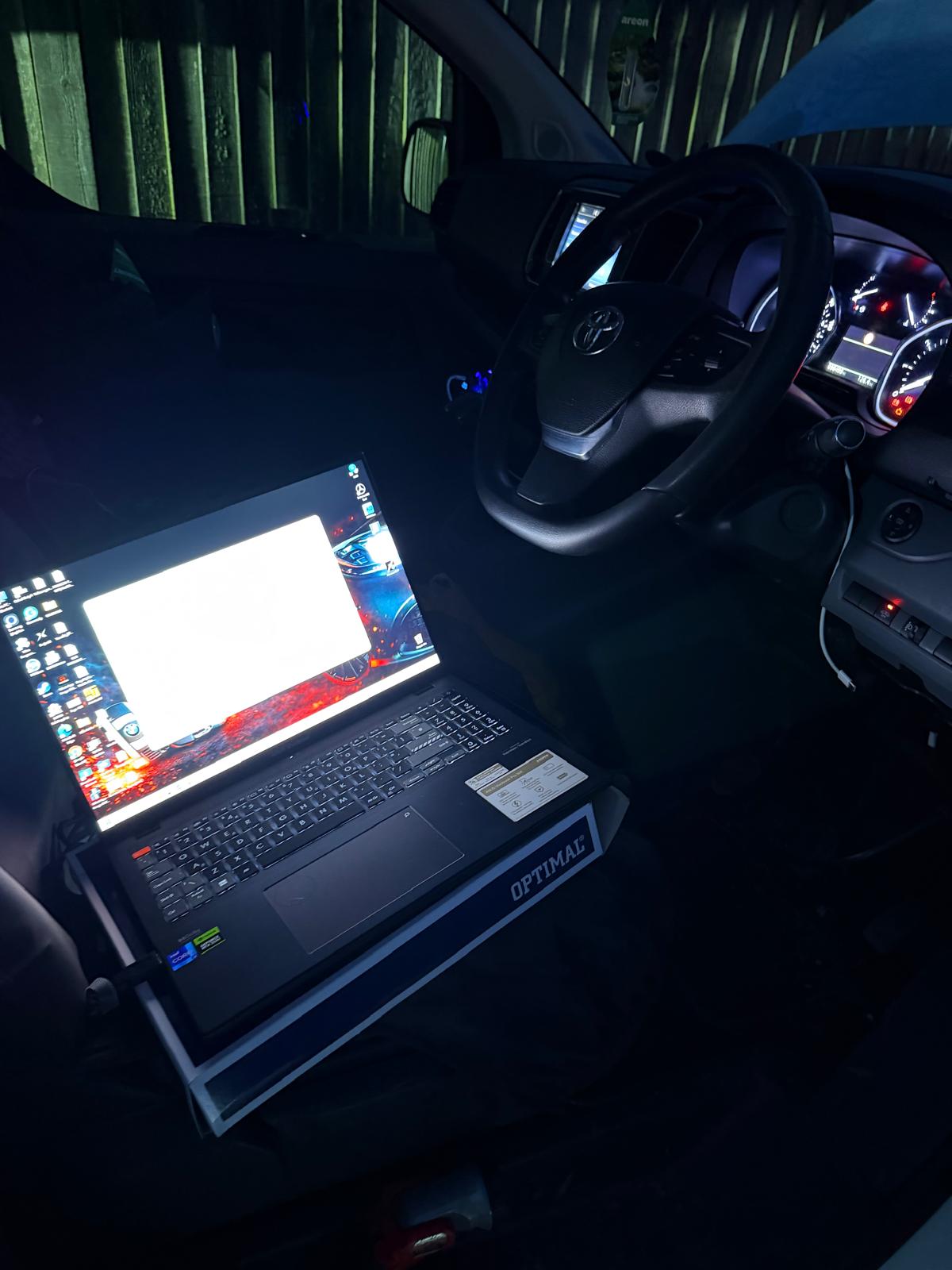
Every UK car registered since November 2014 carries a direct or indirect TPMS — and the system is an MOT-fail item if the warning light stays on with the engine running. Direct systems (BMW RDC, Mercedes ASSYST, Audi/VW Tiguan/Q5/Touareg, most JLR, most Toyota) use a radio sensor inside each wheel that has to be paired to the body control module by serial number. Indirect systems (most VW MQB, most Vauxhall, most Ford) compare wheel-speed sensor data and need a software relearn after any tyre change or pressure adjustment. The fault you actually see — a steady or flashing light — almost never tells you which kind you have. Our mobile vans carry every tool needed: an OEM-spec scan tool for the relearn, an Autel/ATEQ-class programmer to write IDs into blank universal sensors, and a stock of universal MX-Sensors for replacement.

  • TPMS reset / relearn — fixed quote
  • Programme universal sensors to OE IDs — fitting
  • Clone existing IDs onto winter / summer / track wheel sets
  • BMW RDC, Mercedes ASSYST, VAG, JLR, Ford, Vauxhall — all supported
  • Diagnose dead sensors with battery-life and signal-strength test
  • Pre-MOT TPMS check — pass first time, no advisory
  • Most jobs done quickly, subject to technician availability and traffic on the driveway
  • Fixed quote before work

How it works

Four steps, no surprises

  1. 01

    Tell us the problem

    Send your registration, location and what has happened.

  2. 02

    Your quote first

    Your quotation confirms the full price; a call-out fee applies.

  3. 03

    We come to you

    At home, work or roadside. Your arrival estimate is confirmed with your quote.

  4. 04

    Work checked

    The agreed work is completed and checked at your vehicle.

Why choose us

StageMyCar, at your car

At your vehicle

Mobile service at your home, workplace or roadside location.

Quote before work

Your vehicle and the work needed determine your quotation.

Dealer-level equipment

Diagnostic, cutting and programming tools brought to the car.

Fully insured

Public and professional indemnity cover.

Symptoms We Diagnose

Warning Lights & Symptoms We See Most.

These are the symptoms our customers describe when they book tpms reset & programming. If yours matches one of these, we can usually clear the fault and code/calibrate the affected module on site — no garage drop-off, no waiting list.

Amber TPMS warning light steady on the dash
Amber TPMS light flashes 60–90 seconds then stays on (system fault)
Light comes on after a tyre rotation or seasonal wheel swap
Light comes on after a flat tyre repair
Only one corner reads — others show dashes
Sensors paired but pressures look stuck on last-known values
Warning light pre-MOT advisory or fail
New aftermarket wheels installed and TPMS not recognising sensors
Cloned sensors from another car not pairing
Light comes on every winter when temperature drops below 5°C

Common Causes & What We Check.

Most tpms reset & programming jobs trace back to one of a handful of root causes. We work through them in order, using a dealer-grade OEM-spec scan tool, a multimeter and a road-test — not a code-reader and a guess.

Flat sensor battery (most common after 5–7 years)

Direct TPMS sensors are sealed units with a 5–7 year battery life. When the cell dies the sensor goes silent and the BCM reports a system fault. We test battery voltage and signal strength on every wheel as the first step.

Sensor IDs not paired after wheel swap

Direct systems remember a specific 4-byte ID per corner. A winter-wheel set with different sensors needs the IDs re-paired to the BCM, either via OBD (BMW, Audi, JLR) or via an auto-relearn drive (Ford, Vauxhall, some Toyota).

Universal aftermarket sensor not programmed

Universal MX-Sensors and Autel sensors ship blank. They have to be programmed to the OEM protocol of the car before they will transmit anything. Common cause of 'new sensor fitted but light still on' jobs.

Cold-weather pressure drop

A 10°C drop loses around 1 PSI in every tyre. On a borderline-pressure car the system trips the low-pressure warning the first cold morning. We re-inflate, reset and check for slow leaks.

Indirect TPMS relearn missed

On indirect-TPMS cars (most VW MQB, Vauxhall, Ford Fiesta/Focus) the system has to be told via OBD or a long-press of the reset button that the current pressures are now the reference. Skipping this step leaves the light on permanently.

Damaged valve stem or sensor body

Aluminium-stem TPMS sensors corrode where they meet the rim — common on cars used near the coast or in winter salt. We replace the valve core, gasket and nut as standard on any sensor we touch.

Our On-Site Diagnostic Process.

Every tpms reset & programming job follows the same six-step process. No skipping steps to save time, no upselling a part you don't need.

  1. 1
    TPMS system identification

    We confirm whether the car is direct or indirect TPMS, what protocol it uses (315 / 433 MHz, ATA / FSK / Schrader / Continental) and which relearn method is required.

  2. 2
    Sensor health check on all four corners

    Battery voltage, signal strength and reported pressure verified at each wheel with an OEM-grade trigger tool before any work starts.

  3. 3
    Programme universal sensors if needed

    Blank MX-Sensors or Autel sensors written to the exact OEM protocol of the car, plus the original sensor IDs where available (clone mode) or fresh IDs ready for OBD pairing.

  4. 4
    Run the relearn / pairing routine

    Platform-specific — BMW INPA RDC reset, VAG ODIS Adaptation 02 channel 11, JLR SDD relearn, Ford IDS auto-learn drive instructions, Toyota Techstream registration.

  5. 5
    Pressure check & set to placard

    All four tyres set to the door-placard pressures, with a tolerance check against the live data on the scan tool.

  6. 6
    Road test & MOT-style verification

    Short drive to confirm the warning light extinguishes and the live pressures update in real time across all four corners.

TPMS Reset & Programming Pricing · Fixed, Not Hourly.

Every price below is fixed and includes the on-site visit, the scan, the diagnosis report and any coding/calibration needed to clear the fault. Parts (if required) are quoted separately before any work starts.

TPMS Reset / Relearn
OBD or auto-relearn pairing
Fixed quoteOne visit
Programme & Fit 1 Universal Sensor
MX-Sensor + programme + balance
Fixed quoteOne visit
Programme & Fit 4 Universal Sensors
Full set + pair to BCM
£189One visit
Clone Existing IDs to New Sensors
For winter/summer wheel sets
Fixed quoteOne visit
TPMS Diagnostic (no pairing)
Battery & signal test all 4 corners
Fixed quoteOne visit
Pre-MOT TPMS Check
Scan, relearn, road-test
Fixed quoteOne visit

Out-of-hours surcharge priced by quote (before 09:00, after 18:00, weekends & bank holidays). All prices include VAT.

Vehicles & Platforms We Cover.

Our vans carry OEM-spec scan tools for every modern UK-market platform. Below is a snapshot of the makes and platforms we handle for tpms reset & programming.

BMW · all E, F, G chassis (RDC direct system)
Mini · R56, R60, F56, F60 (BMW-derived RDC)
Mercedes-Benz · W204, W205, W213, W447, W167
Audi · all MQB & MLB (A3, A4, A6, Q3, Q5, Q7)
VW · Tiguan, Touareg (direct) · Golf MQB (indirect)
Skoda, SEAT, Cupra — direct & indirect variants
Ford · Fiesta, Focus, Kuga, Transit (Schrader)
Vauxhall · Astra J/K, Insignia, Mokka (Schrader/Continental)
Land Rover · Discovery 3/4/5, Range Rover L405/L494/L538
Jaguar · X760, X260, X152, F-Pace, I-Pace
Toyota & Lexus · Auris, Corolla, RAV4, NX, RX, IS
Honda, Kia, Hyundai, Nissan, Mazda — full coverage
Payment Assist · Official Partner

Spread the Cost with Payment Assist

On selected services over £250, you can split the total into 3 or 4 monthly payments with 0% APR available. A small deposit is paid on the day, then the remaining balance is collected in equal monthly instalments. No long forms, no waiting — applied on site before work begins.

  • 0% APR available on selected services
  • 3 or 4 equal monthly payments
  • Deposit paid on the day
  • Soft credit check — no impact at quote stage
  • Decision in minutes, on site
  • Available on jobs over £250

Finance subject to status and approval and provided by Payment Assist Ltd, authorised and regulated by the Financial Conduct Authority. 0% APR available on selected services. Terms, eligibility and final monthly figure confirmed at application. StageMyCar UK is an introducer appointed representative — we do not charge a fee for this service.

Example · Illustrative
Example £360 job · 0% APR
3 payments
£120/mo
£120 deposit
4 payments
£90/mo
£90 deposit
Provided by Payment Assist — StageMyCar is not a lender
Decision in minutes — apply on site
Subject to status & approval

Indicative example only. Final terms confirmed at application.

TPMS Reset & Programming — Questions

How much does TPMS reset cost?

Fixed quote for a standalone TPMS reset / relearn. Additional sensors are quoted individually. £189 for a full set of 4 universal sensors programmed, fitted, balanced and paired. All prices include the on-site visit.

Will my car fail its MOT with the TPMS light on?

A TPMS warning light that stays on with the engine running is an MOT fail under the current manual. We run a pre-MOT TPMS check as part of a diagnostics visit so customers can pass first time.

How long do TPMS sensors last?

5–7 years on most direct systems. They are sealed units with a non-replaceable battery, so when the cell dies the whole sensor has to be replaced. We typically see batteries failing at 6 years on BMW RDC, Mercedes and Audi MQB cars.

Do I have to use OEM sensors or can I fit universals?

We fit Autel MX-Sensors or Schrader EZ-Sensors on most cars. They are programmable, support every OEM protocol and carry the same 5-year battery life as the original. They cost roughly half the OE price and pair exactly the same way.

Can you clone my sensors onto a winter wheel set?

Yes. We read the 4 existing sensor IDs, programme blank universal sensors to those same IDs, fit them to the winter wheels and you can swap seasonally with no relearn needed. Fixed quote for a full set.

Why won't my new sensor pair to the car?

Two common reasons: the sensor is blank (universal sensors ship un-programmed and must be written to the OEM protocol first), or the car needs an OBD pairing procedure that wasn't done. We diagnose and fix both on the driveway.

What is the difference between direct and indirect TPMS?

Direct TPMS uses a radio sensor inside each wheel reporting actual pressure. Indirect TPMS uses the existing wheel-speed sensors and compares rotational speed to flag a low tyre. Direct gives you per-corner pressures in the cluster; indirect just gives you a warning light. Both require a relearn after any tyre work.

Do you cover the Heathrow car parks?

Yes — we attend Heathrow Terminal 2, 3, 4 and 5 long-stay, business parking and POD car parks. Common job for returning passengers whose TPMS light came on mid-trip.

Why Drivers Choose StageMyCar For TPMS Reset & Programming

Most tpms reset & programming faults aren't a "swap the part and hope" job — they're a coding, calibration and adaptation problem. A high-street garage with a generic OBD reader can pull a fault code but often can't write the calibration data back to the module after a repair, which is why so many customers tell us the warning light came back the next morning. Our vans carry dealer-grade tooling for every UK-market platform, so the calibration that clears the light isn't a separate dealer trip — it's part of the same fixed-price visit.

We attend driveways, workplaces, supermarket car parks, airport long-stays and roadside breakdowns across London, the M25 corridor and the M3/M4/M40 commuter belt. Fixed price quoted on WhatsApp before we attend; cards, cash, bank transfer and Payment Assist (3–4 monthly instalments on jobs over £250) all accepted.

Related diagnostics: Car Diagnostics Hub · Auto Electrical · ECU Fault Diagnosis · Mobile Diagnostics West London · Car Diagnostics Near Me

On this page

TPMS reset and programming: identify the warning before choosing the remedy

A tyre-pressure warning can mean low pressure, a fault in the monitoring system or an incomplete setup after wheel work. Those possibilities need different responses. Resetting the display without establishing tyre condition can hide the reason for the alert rather than resolve it. StageMyCar's TPMS enquiry should begin with the vehicle details, the warning shown and any recent tyre or wheel changes. The fitted configuration determines whether sensor testing, registration, programming or an indirect-system calibration is relevant. This guide explains those distinctions and the safety checks that should come before any attempt to make the warning disappear.

Treat the warning as information about safety

Find a safe place to stop if the car shows a tyre-pressure alert, particularly if handling changes, vibration or visible tyre damage accompanies it. Do not continue driving on a tyre that may be unsafe just to see whether the warning clears. Check the vehicle handbook for the meaning of the displayed symbol or message and seek roadside assistance if the vehicle cannot safely be assessed or moved.

A pressure-monitoring system is an aid, not a substitute for checking tyres. It cannot establish that a sidewall is undamaged or that a puncture repair is suitable. Inflation should follow the vehicle's specified pressures for the fitted tyres and loading conditions, not a number guessed from another car. If a tyre will not retain pressure, repairing the leak takes priority over resetting the electronics. Explain these symptoms when requesting help so that tyre work and electronic diagnosis are not confused.

Confirm direct or indirect monitoring

A direct TPMS uses wheel-mounted pressure sensors on vehicles so equipped. An indirect system infers a possible pressure change from other vehicle data, commonly wheel-speed information, rather than reading a pressure sensor inside every wheel. Some vehicles offer different arrangements across specifications or markets. Identify the fitted system from vehicle-specific information and diagnostic evidence instead of assuming that a brand always uses a particular design.

This distinction determines the job. An indirect system does not need replacement radio sensors merely because a warning appears. Conversely, a direct system with an incompatible or silent sensor is not necessarily repaired by a dashboard reset. The ability to display individual tyre pressures can be helpful context but should not replace proper identification. Tell the technician the exact model, wheel changes and warning behaviour, and let the assessment establish which components and procedures are actually relevant.

Distinguish reset, relearn and programming

These terms are often used loosely in enquiries. A reset may acknowledge corrected pressures or initialise a reference, depending on the vehicle. A relearn can teach the car which sensors are fitted or where they are located. Programming may configure a compatible replacement sensor for the required application. The manufacturer's procedure determines which of these operations is appropriate and whether they are separate steps.

A newly fitted universal sensor may need configuration before the vehicle can recognise it, while another replacement might already carry the correct application settings. Neither description establishes whether installation, registration and final verification are included in a quote. Ask for the proposed operation in plain language. The useful outcome is not simply that a tool has displayed a success message, but that the correct system is configured and the original warning has been explained without masking an unresolved tyre or vehicle fault.

Need help with your car now?

A call-out fee applies; your quote confirms the full price.

Investigate changes after wheel or tyre work

A warning following a tyre replacement, puncture repair or wheel swap provides a useful starting point. Tell the technician exactly what changed, including whether the wheels, valves or sensors were replaced. Keep any invoice or part reference available. The timing of the warning may suggest where to investigate, but it does not prove the tyre fitter damaged a sensor or that programming is the only missing step.

On a direct system, compatibility, sensor response and registration may need checking. On an indirect system, corrected pressures and a suitable calibration may be relevant once tyre condition is confirmed. Different wheel or tyre specifications can also introduce issues beyond a reset service. Ask whether the installed components meet the vehicle's requirements before pursuing software changes. If physical tyre work is required, establish who will carry it out and whether a separate fitting service is needed rather than assuming every electronic visit includes wheel removal.

Interpret sensor tests without overclaiming

A TPMS assessment may compare sensor responses, vehicle fault information and pressure readings where the equipment and system permit. A sensor that does not respond could have a depleted internal power source, damage, incompatibility or another communication problem. A missing display value is a symptom, not a complete diagnosis. The technician should explain the evidence supporting a proposed replacement.

Not every sensor exposes the same health information, and diagnostic equipment cannot necessarily measure every internal condition directly. Ask whether a reported result is a measured value, a status flag or an inference. If replacement is appropriate, the sensor body, valve arrangement and vehicle application all matter. A component that can transmit is not automatically suitable for the wheel or the car. Accurate diagnosis avoids replacing a complete set merely because a warning appeared, while recognising that more than an isolated sensor fault may be present.

Understand sensor identity and wheel sets

Direct systems recognise compatible sensor identifiers according to their design. Replacement sensors may require registration, or a supported application may permit another appropriate identity-management approach. Ask which method is proposed and how it interacts with any additional wheel set you use. Cloning a sensor identifier is not a universal substitute for confirming protocol compatibility, installation quality and the vehicle's learning requirements.

Tell the service if another set of wheels is stored nearby or regularly fitted to the same car. The relevant question is how the vehicle distinguishes and learns the installed set, not whether an identical-looking valve is present. Keep a record of which sensors belong to which wheels if the technician recommends it. Avoid buying sensors purely from a seller's broad brand claim. Confirmation should relate to the actual vehicle configuration, intended wheel fitment and available programming or registration method.

Need help with your car now?

A call-out fee applies; your quote confirms the full price.

Calibrate indirect systems only from a sound baseline

An indirect TPMS depends on an appropriate reference state. Calibration should therefore follow checks that the tyres are safe, correctly specified and set to the pressures recommended for the vehicle and load. Resetting with a soft tyre can teach the system an unsuitable baseline. It should not be used as a way to silence a warning while postponing a puncture inspection.

Wheel-speed or stability-system faults can also affect an indirect monitoring arrangement. If related warnings are present, tell the technician rather than requesting only a tyre-pressure reset. Any required learning procedure should follow the manufacturer's instructions and should not involve asking the owner to drive an unsafe vehicle. Where a controlled verification drive is appropriate, the vehicle must first be suitable for road use. An unresolved warning after calibration calls for further investigation, not an endless cycle of resetting the same message.

Define the service and its practical limits

Provide registration details, the exact warning and the history of recent tyre work when requesting a TPMS quote. Explain whether tyres are currently holding pressure and whether a wheel or sensor has already been replaced. Ask whether the enquiry covers diagnosis only, sensor configuration, vehicle registration or associated fitting. These are related activities but should not be assumed to be interchangeable.

A call-out fee applies; your quote confirms the full price. The suitability of a mobile location and the need for tyre-fitting equipment should be considered before work is arranged. A damaged tyre, corroded valve or inaccessible component may require a different scope from the one described initially. Request an explanation before authorising additional work. The purpose of the appointment is to resolve the identified issue within the agreed service, not to promise that every pressure warning can be cured through a software tool.

Verify the result without treating it as a tyre certificate

The final check should relate to the system fitted. That may include confirming sensor recognition, plausible reported values, an accepted calibration and appropriate warning behaviour. Ask what has been verified and whether the manufacturer requires any further operating conditions before the system completes its learning. A display that looks normal at handover does not establish the long-term condition of every tyre or valve.

Continue ordinary tyre inspections and pressure checks after the electronic work. If the warning returns, record the circumstances, the affected display and any changes in tyre condition. Do not assume it is harmless because a reset was previously performed. Keep the diagnosis and component details with the vehicle records so that another technician can understand what was changed. A useful TPMS service leaves you with an explained warning, a defined repair or calibration and clear advice about any tyre concern that remains.

More questions about this service

Can I reset TPMS instead of repairing a puncture?

No. A leak or unsafe tyre needs attention before an electronic reset or calibration.

Does every car have sensors inside its tyres?

No. Indirect systems use other vehicle data rather than a pressure sensor in each wheel.

Is programming the same as relearning?

Not necessarily. Configuring a sensor and teaching its identity to a vehicle can be separate operations.

Will any universal sensor work?

Only a sensor compatible with the actual vehicle application, wheel fitment and available configuration method should be considered.

Does a warning after a wheel swap prove sensor damage?

No. Compatibility, registration, calibration and actual tyre pressure may all require checking.

Is a cleared warning proof the tyres are safe?

No. Electronic verification does not replace inspection of tyre condition and pressure retention.

Mobile service

Ready to Book?

Your registration, postcode and the problem help us confirm the work and your quotation.

Arrival estimate confirmed with your quote.

StageMyCar is a mobile auto locksmith and ECU specialist working across West London, Surrey and Berkshire. Available 24/7 for emergency auto locksmith callouts. Scheduled remapping, diagnostics and non-emergency appointments are booked 08:00–20:00. Call 07312 826380 for a quote.

Call 07312 826380WhatsApp