

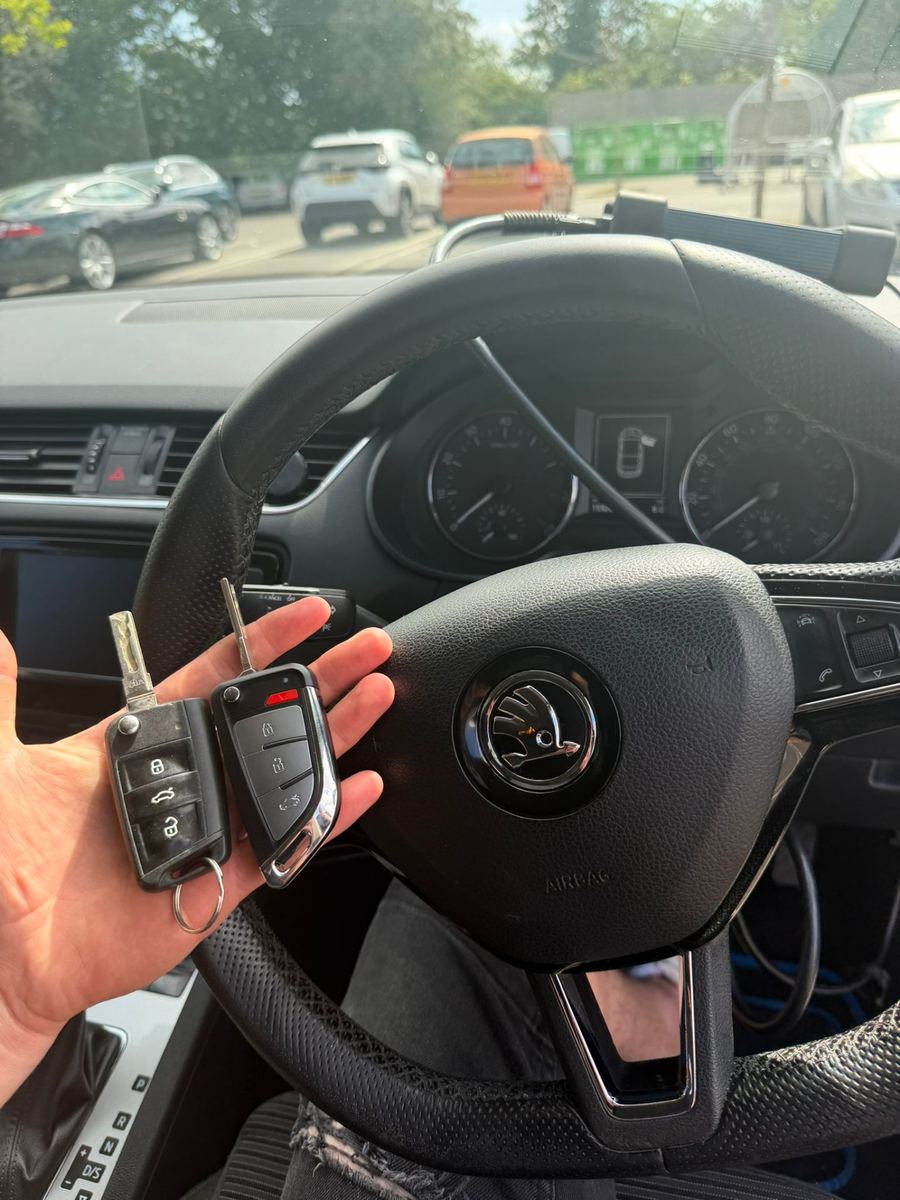


Citroën spare car keys: start with the surviving key and verify every function
Start a Citroën spare-key enquiry with the surviving key. Establish what it actually does before deciding what an additional key needs to reproduce. Does it open the car, start the engine, operate the remote buttons and provide keyless access where fitted? A dependable surviving key gives a different starting point from an intermittent key or a situation where nothing usable remains. Spare-key support is conditional on the actual vehicle, security system and compatible key being identified. Verification should cover both the new key and the retained key where relevant.
Check the surviving key before requesting a spare
Describe the surviving key’s condition and ordinary use. Tell the assessor if you need repeated button presses, if starting sometimes produces a key warning, or if the blade feels difficult in a mechanical lock. These symptoms matter even when the car eventually responds. An additional key request should not conceal a problem that may involve the original key, the vehicle’s electrical supply or the locking system.
Keep the key intact and available. If the casing has opened, retain the loose parts rather than transferring components into an unverified shell yourself. Explain whether another key exists but is unavailable or untested. A surviving remote that opens the doors but cannot start the car should not be described as fully working. Accurate function checks help distinguish a straightforward spare enquiry from a repair or diagnostic problem and prevent the proposed new key from being judged against an unreliable starting point.
Identify the fitted Citroën key system
The Citroën model name is useful background, but the fitted security system determines compatibility. Production changes, equipment differences and previous repairs can affect the appropriate key. Provide the registration and model details, describe whether there is an ignition barrel or start button, and explain how the surviving key is used. Mention replacement locks or security modules if you know about them.
An identical-looking remote case does not establish that another key has the correct electronics or can be programmed using a supported method. The blade, transponder and remote functions all need consideration, along with any keyless features. Ask for compatibility to be confirmed before buying a key independently. A second-hand or unfamiliar key may carry limitations that are not visible from its appearance. If the actual vehicle or key type cannot be supported, the correct response is to identify that limit, not to proceed because a similar Citroën uses a superficially comparable key.
Agree what the additional key should do
Define the spare by function rather than appearance. You may want a complete everyday alternative, or you may be asking about an access-only item. Mechanical access, engine starting, remote locking and keyless operation are distinct capabilities. A cut blade that opens a lock is not automatically an authorised starting key, and a remote button opening the doors does not establish every other function.
Explain who will use the spare and how it will be stored, without sharing unnecessary personal information. If different authorised drivers need dependable independent access, make that expectation clear. Ask which functions are supported for the actual vehicle and included in the proposed work. Any limitation should be understood before authorisation rather than discovered when the usual key is unavailable.
Need help with your car now?
A call-out fee applies; your quote confirms the full price.
Prepare authorisation and the keys you intend to retain
Have evidence that you are entitled to request an additional key and ask what verification documents are required. Company vehicles, leased cars and situations involving a representative may need clarification. Possession of a working key does not remove the need to establish authority to add another. Share identity or vehicle documents only through an appropriate requested process, not as unnecessary attachments to a general enquiry.
Ask whether all existing keys intended to remain in use must be available during the supported programming procedure. Different systems and methods can have different requirements, so do not assume an absent key will be unaffected. Explain if an older key is lost rather than merely stored elsewhere, because that creates a separate security question. Keep a clear account of which keys currently work and which you want retained. This makes the proposed scope and the final verification less ambiguous for everyone involved.
Understand the separate mechanical and electronic tasks
A spare can involve blade preparation and electronic programming, depending on the fitted system and agreed specification. The blade has to match the relevant mechanical lock arrangement. The electronic parts have to be compatible with the vehicle and authorised through a supported procedure. Remote operation and any keyless features also need checking rather than being assumed from a successful engine start.
Tell the assessor about battery trouble, recent electrical repairs and any previous failed key-programming attempt. Those details can affect whether the vehicle is ready for key work or needs diagnosis first. Do not repeatedly disconnect the battery or follow generic programming instructions in an attempt to prepare the car. A procedure intended for another Citroën system may not apply. Ask what work is proposed on your actual vehicle and what functions will be checked afterward. The process should be based on identification and supported access, not a visual match between key housings.
Verify the spare and the surviving key
Handover checks should follow the agreed function list. Where applicable, verify locking and unlocking from the remote, mechanical access, engine starting and supported keyless use. The surviving key should also be checked where relevant so you know which keys remain usable. Ask how checks distinguish the new key from the original when more than one electronic key is nearby; otherwise it may be unclear which key the vehicle recognised.
A spare should be tested as the intended independent alternative, not simply carried alongside the everyday key while someone confirms that the engine starts. Any issue needs a specific description: a failed button, a key warning, a blade problem or inconsistent recognition. Do not assume a spare that has never been checked will work when needed. Retain instructions about emergency access or low key-battery warnings that apply to your fitted system, and ask about any function that remains uncertain before putting the spare into storage.
Need help with your car now?
A call-out fee applies; your quote confirms the full price.
Treat intermittent recognition as a diagnostic question
If the surviving key sometimes fails, the existence of a spare does not by itself establish the cause. The problem may lie in a key, a remote battery, the vehicle’s electrical supply, a receiver or another part of the security system. Note whether remote locking and engine recognition fail together or independently. Report warning messages accurately and explain whether the problem affects every available key.
Comparing the behaviour of verified keys can provide useful evidence, but it is not a substitute for diagnosis. Avoid replacing parts solely because a message mentions a key or immobiliser. If the vehicle will not start, explain that as a separate current symptom rather than assuming the spare-key request will resolve it. Additional diagnostic work should have its own agreed scope. If the remaining key becomes unusable before the spare is arranged, update the enquiry because the situation may now require assessment as a lost-working-key case rather than ordinary duplication.
Store a verified spare so it remains useful
Once verified, keep the spare separately from the everyday key. Storing both on the same ring or in the same bag defeats much of the purpose of having an alternative. Choose a secure arrangement that authorised users understand, without leaving the key inside the vehicle or attaching documents that identify the car and where it is kept.
Protect the key from moisture, impact and pressure on its buttons. If it has an internal emergency blade, understand how that is accessed without forcing the casing. Follow the relevant vehicle guidance for replacing a remote battery and responding to warnings; do not assume a weak remote battery means the electronic authorisation has been erased. If you later notice damage or an uncertain function, have it checked before relying on the spare.
Make the spare-key scope clear before approval
For a Citroën spare-key enquiry, provide the vehicle details and describe the surviving key’s verified functions. Say whether you use an ignition barrel or start button, whether all retained keys can be made available, and whether any key is missing. Mention previous lock or security-system work and any key you have already purchased. These details help assess compatibility without assuming every model uses the same procedure.
A call-out fee applies; your quote confirms the full price. The agreed scope should identify the spare’s intended functions and distinguish key work from any investigation of a pre-existing fault. Ask what verification is included and whether the surviving key will be checked as part of handover. If compatibility or authorisation is unresolved, pause rather than treating a similar-looking key as sufficient.