

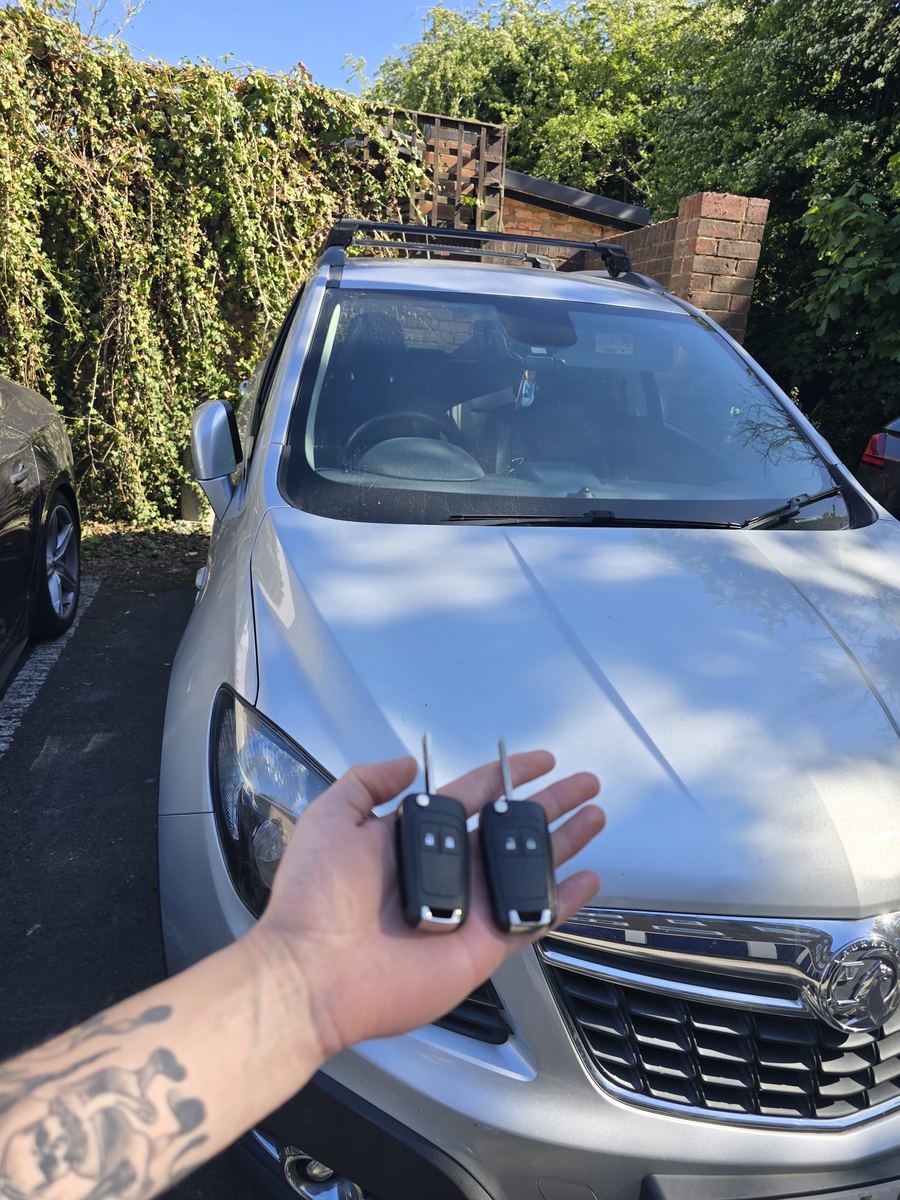


Lost Citroën keys: establish the loss, the fitted system and the security scope
When Citroën keys disappear, there are several questions to answer before a replacement can be specified. Is any usable key still available? Is the car locked? Was the missing item misplaced or potentially stolen? Does the vehicle have an existing electrical or recognition fault? These details affect the assessment in different ways. A Citroën name or a familiar remote shape cannot establish compatibility. The useful starting point is an accurate account of the actual car and what has happened, followed by a supported plan for access, replacement and any separate security concerns.
Distinguish a missing key from a missing working key
List every key you know about and where it is. Include a key held by another authorised driver, one stored elsewhere and any damaged item you still possess. Explain which ones have recently opened and started the car. A remote that unlocks a door but no longer authorises starting is not equivalent to a usable spare. Likewise, an unavailable spare is different from having no other key at all.
If there is a sensible opportunity to check belongings or contact a place you recently visited, do so without leaving yourself or the vehicle in an unsafe situation. Update the enquiry if a key is found. Its recovery may change the replacement requirement, but it does not automatically settle concerns about who had possession of it or whether its condition has changed during the loss.
Describe access and starting as different problems
Say whether the Citroën is locked, whether personal items are inside and whether anyone has legitimate access. If you can enter the car but it will not start, describe the dashboard message and what happens when you make the normal starting attempt. These observations help separate an access request from a missing electronic authorisation, an electrical supply problem or another fault. They do not establish the diagnosis by themselves.
Do not force the door, improvise tools or dismantle the ignition in an attempt to reduce the work required. For any owner checks, consult the handbook that matches the vehicle and fitted system. Follow only the relevant instructions, and stop if something resists or the guidance is unclear. A child, vulnerable person or animal in immediate danger requires emergency assistance rather than waiting for an ordinary service enquiry.
Identify the actual Citroën security configuration
Provide the registration, model and reliable vehicle details, together with a description of the missing key. Explain whether starting normally involves a key barrel or a start button. Mention known replacement locks, security module work and earlier key problems. Photographs of a retained key may help an assessor, but a photograph cannot prove that another item with the same casing has compatible electronics or a usable programming status.
The exact car needs assessment before a key or method is confirmed. Do not purchase a remote merely because an advert names your Citroën model. Blade configuration, electronic authorisation and remote or keyless functions need consideration together. A second-hand key should not be assumed suitable or reusable. Ask about supply requirements before spending money on a part that might not be supported on the vehicle in front of you.
Need help with your car now?
A call-out fee applies; your quote confirms the full price.
Prepare evidence of authority without oversharing
Ask what identification and vehicle evidence will be needed to authorise access and key work. Explain early if the registered keeper is unavailable or if the car belongs to an employer, leasing company or family member. A person reporting the loss may not be the person entitled to approve replacement keys. Resolving that distinction beforehand avoids making assumptions about authority when the vehicle is being assessed.
Send documents through the requested process rather than posting them publicly or attaching a complete identity record to an initial message. Provide enough information to establish the relationship to the car, and ask about any uncertainty in the requirements. If ownership or permission cannot be established, work may not be able to proceed. Possession of vehicle details, a key photograph or access to the passenger compartment does not remove that responsibility.
Decide what the replacement needs to do
Specify the functions you need rather than asking only for a matching remote shell. Mechanical entry, engine authorisation, remote locking and keyless operation, where fitted, are separate aspects of the requirement. A blade prepared for a lock is not automatically a key that can start the engine. Equally, a successful remote button press does not establish that every intended function has been restored or correctly assessed.
Explain whether you need an everyday replacement, an additional independent key or both, subject to compatibility. Ask which functions are included in the proposed key and what limitations apply. Any mechanical preparation and electronic work should form a clear scope, rather than being inferred from appearance. If part of the existing system is faulty, make sure the proposed key is not being presented as a certain cure for that separate issue.
Ask separately about the key that remains missing
Tell the assessor if theft is suspected or if the key disappeared with information identifying the vehicle. Where a supported procedure allows missing electronic keys to lose starting authorisation, ask what that means on the actual system. Do not assume it happens automatically when a replacement is supplied. Explain which retained keys must continue working and ask whether they need to be present for the agreed procedure.
Loss of electronic starting authorisation does not remove the mechanical ability of a matching blade to operate an unchanged lock. Access protection therefore needs its own consideration. Ask whether the circumstances call for further lock or security advice, and consult your insurer or police where appropriate to a suspected theft. A clear handover should distinguish what was changed electronically from any mechanical protection that remains unchanged, without suggesting the whole security risk has disappeared.
Need help with your car now?
A call-out fee applies; your quote confirms the full price.
Report conditions that may complicate key assessment
Mention a flat vehicle battery, warning messages, water exposure, recent repairs or an earlier unsuccessful programming attempt. If the car failed to start before the key went missing, that history is especially important. Replacement key work should not be expected to resolve every existing recognition or electrical problem. The assessor may need a diagnostic step or a different specialist route before deciding what key work is appropriate.
Avoid clearing warnings, disconnecting components or following generic online learning sequences while waiting. Those actions can change the evidence and may not apply to the fitted Citroën system. Retain damaged key parts and any relevant repair paperwork without attempting to transfer electronics yourself. If another key becomes available, report exactly what it does through normal handbook-guided use rather than assuming its presence proves the rest of the car is healthy.
Clarify location, scope and price before approval
Give the actual vehicle location and explain parking restrictions, permission requirements and any access obstacles. The service setting and vehicle condition need assessment alongside compatibility. Do not assume that every locked or immobile Citroën can have all requested work completed wherever it stands. If recovery or a separate assessment is necessary, ask who would arrange it and what remains outside the proposed key service.
A call-out fee applies; the quote confirms the full price. Ask whether the proposal covers entry, the compatible replacement, mechanical preparation, programming and any agreed missing-key security work. These are questions about scope, not a promise that every item is needed or supported. Understand how additional findings would be handled before authorising work, including the need for fresh approval if a separate fault changes the plan.
Leave with a function record, not just a new casing
At handover, review the functions agreed for your actual car. Checks should address starting, locking, relevant mechanical access and any supported keyless features, rather than relying on the remote's appearance. Ask how the replacement is checked independently of another authorised key nearby. If retained keys form part of the work, establish which ones were checked and whether any expected function remains uncertain before relying on them.
Keep the invoice, agreed specification and any explanation of the missing key's electronic status. Follow the matching handbook for emergency access and key battery guidance. Store any verified spare away from the everyday key so another loss does not remove both alternatives. If the missing key is subsequently recovered, ask for advice before assuming it remains usable or that its electronic status tells you everything about its ability to open a lock.