

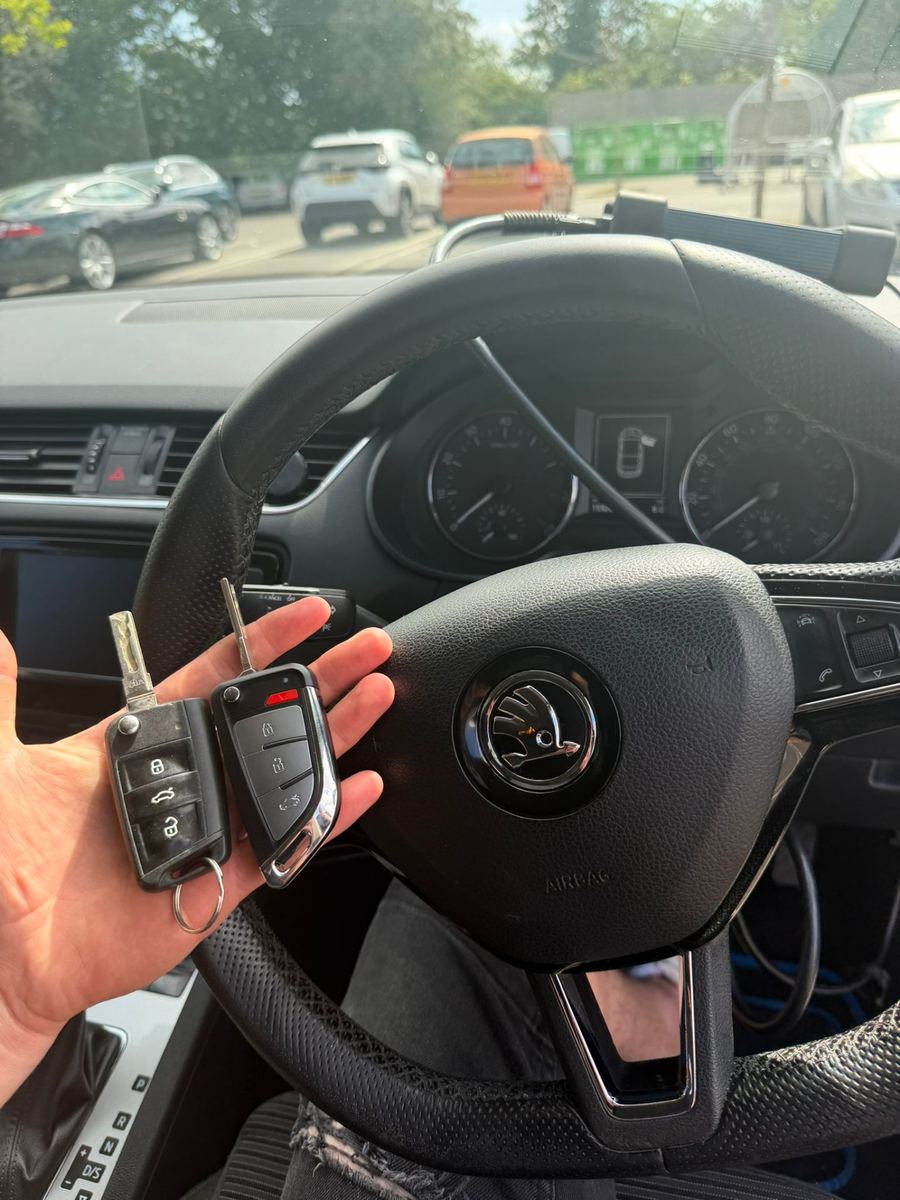


SEAT key replacement London: compatibility and authorisation first
A replacement SEAT key must be appropriate for the individual vehicle and supplied through an authorised process. A similar-looking remote or a shared model name is not enough to establish compatibility. For a London enquiry, start with the exact car, the key situation and your authority to request the work. This guide explains the decisions without promising support for every model, year or security system.
Identify the job before choosing a key
Decide whether you need an additional working key, replacement of a damaged key or assistance because no usable key remains. Those situations can require different assessment and authorisation. Describe whether the existing key starts the car, operates the remote buttons or provides only mechanical access. Avoid reducing all of these functions to a statement that the key either works or does not work.
If a key is missing, distinguish a misplaced spare from a suspected theft and consider your insurer's reporting requirements. If the vehicle is inaccessible or in an unsafe position, explain the circumstances without attempting forced entry. The enquiry should establish what problem needs resolving before anyone suggests a product. A provider may need more information or may refer the vehicle elsewhere; a replacement page is not evidence that every SEAT specification or every all-keys-lost situation can be accepted.
Confirm exact vehicle details privately
Provide the model, model year and registration through the provider's appropriate enquiry process. More detailed identification, including a vehicle identification number where required, should be shared only through a suitable private channel. Do not publish identity documents or a full vehicle record on an open discussion page in the hope of getting a compatibility answer.
Vehicle changes and production variations can matter, so a registration lookup is a starting point rather than the final technical decision. Mention replacement modules, earlier key work or known aftermarket security equipment. If you are uncertain about any of these, say so. Ask the provider what must be verified before they can confirm that the proposed key and authorised programming method are suitable. Do not infer compatibility from another SEAT owner's experience, a similar dashboard or a remote housing that happens to look identical to the one you currently use.
Separate the key functions that need matching
A key may combine a mechanical blade, remote locking functions and an electronic authorisation function used by the vehicle. Matching one element does not establish that all the others are compatible. A case that closes correctly around the electronics is not proof that the electronics can be used with the car. Equally, a blade that turns a lock does not prove the vehicle will authorise starting.
Tell the assessor which functions currently operate and which fail during normal use. Do not attempt programming sequences, module changes or security bypass procedures found online. The suitable solution depends on the individual key system and the available authorised process. Ask whether the proposal concerns a complete key, repair of the existing unit or only a housing or blade issue. That distinction prevents an enquiry about a damaged button becoming an unnecessary assumption that every electronic component must be replaced.
Need help with your car now?
A call-out fee applies; your quote confirms the full price.
Check a proposed key before buying it
Before buying a remote independently, ask whether the intended provider can verify that specific item's suitability. A seller's list of compatible models may omit relevant production or security differences. Used or previously prepared keys can carry restrictions, and a provider may be unable or unwilling to use customer-supplied items. Clarify that before committing to a purchase rather than assuming programming will make any similar remote work.
Request a practical description of what is being supplied and what remains subject to verification. Do not rely solely on photographs, button count or a broad claim that related vehicles share parts. If a key has already been bought, provide its available identification privately and ask for an assessment without presuming it can be adapted. There is no need to seek technical security details yourself; the important consumer decision is whether the item is confirmed appropriate through a legitimate, vehicle-specific process.
Prepare evidence of ownership or permission
Ask what identification, vehicle documentation and proof of authority the provider requires before work can be accepted. A legitimate process should establish that the person requesting access or key work is entitled to do so. Requirements may differ if the registered keeper is not the person making the enquiry, or if the vehicle belongs to a company, fleet or leasing organisation.
If documents are locked inside the car, explain that during the enquiry and ask how authority can be established appropriately. Do not expect checks to be waived because the situation is inconvenient. For a borrowed or company vehicle, obtain the relevant permission instead of relying on possession of a registration number. Share only what is requested through an appropriate channel and ask how sensitive information should be supplied. This keeps the focus on authorised service rather than attempting to discover a route around vehicle security or identity requirements.
Approach all keys lost as a separate assessment
If no working key remains, state that explicitly rather than requesting an ordinary spare. Explain whether the vehicle can be accessed and whether a missing key may be held by someone else. The provider needs to determine whether the exact vehicle can be handled through an available authorised route. Do not assume that experience with another SEAT or a related vehicle establishes support for yours.
Ask how missing-key security will be considered and what the proposed work can and cannot change. Electronic authorisation and mechanical access are separate matters, so changing one should not be described as automatically resolving the other. If theft is suspected, follow appropriate reporting and insurance guidance. Do not attempt to move, unlock or start the vehicle using improvised methods. A referral to another authorised route can be the correct outcome where the necessary compatibility, permission or service capability cannot be established for the individual car.
Need help with your car now?
A call-out fee applies; your quote confirms the full price.
Use the handbook for limited everyday checks
If you still have a key but it behaves inconsistently, consult the handbook for the exact SEAT model and model year. It may explain relevant messages, approved battery replacement guidance and normal operation. Do not assume a generic procedure for another model applies. If the guidance is unclear, stop and ask for professional assessment rather than experimenting with the vehicle's security functions.
A weak remote battery, physical damage and a vehicle-side issue can produce different complaints, but a symptom alone does not confirm the cause. Report any displayed message accurately and describe whether a known working spare behaves differently in ordinary use. Do not repeatedly attempt starting or dismantle electronics to prove a theory. For hybrid or electric variants, observe the specific handbook precautions and do not interact with high-voltage components. These limited observations help define the enquiry without becoming an unsafe troubleshooting or bypass exercise.
Agree a vehicle-specific completion check
Before authorising work, ask which normal key functions will be checked at completion and whether you should bring every retained key. The provider should explain the intended scope and any limitations for the individual car. Do not assume adding one key necessarily leaves every other key unchanged or that every remote convenience feature is included in the replacement.
At handover, review the supplied key's agreed functions in a safe setting, using the exact-model handbook where operation is unfamiliar. Confirm that retained keys have been considered as agreed and ask for any unresolved concern to be recorded. Do not accept a generic assurance in place of an explanation about a function that was part of the scope. Keep the work record with the vehicle documents, but store spare keys securely and separately. If instructions are provided for later use, make sure they describe ordinary authorised operation rather than unsupported workarounds.
Close the decision with security and ownership records
Keep a record of what was supplied, what was checked and any stated limitation. If the key was lost or stolen, check the insurer's notification requirements and ask whether further security advice is needed. Avoid assuming that a new key automatically invalidates every use of the missing item. Tell the provider about the concern and obtain an explanation appropriate to the vehicle rather than a universal promise.
Key replacement should not require unrelated performance changes or disabling emissions equipment. If the car has other modifications, continue to meet the relevant insurance obligations and disclose them where required. For warranty, finance or lease questions, consult the applicable terms rather than assuming all key work has the same effect. The sensible endpoint is an authorised, compatibility-checked solution with clear records, or an honest referral when that solution cannot be established. Neither a London service label nor a shared manufacturer badge replaces that assessment.