

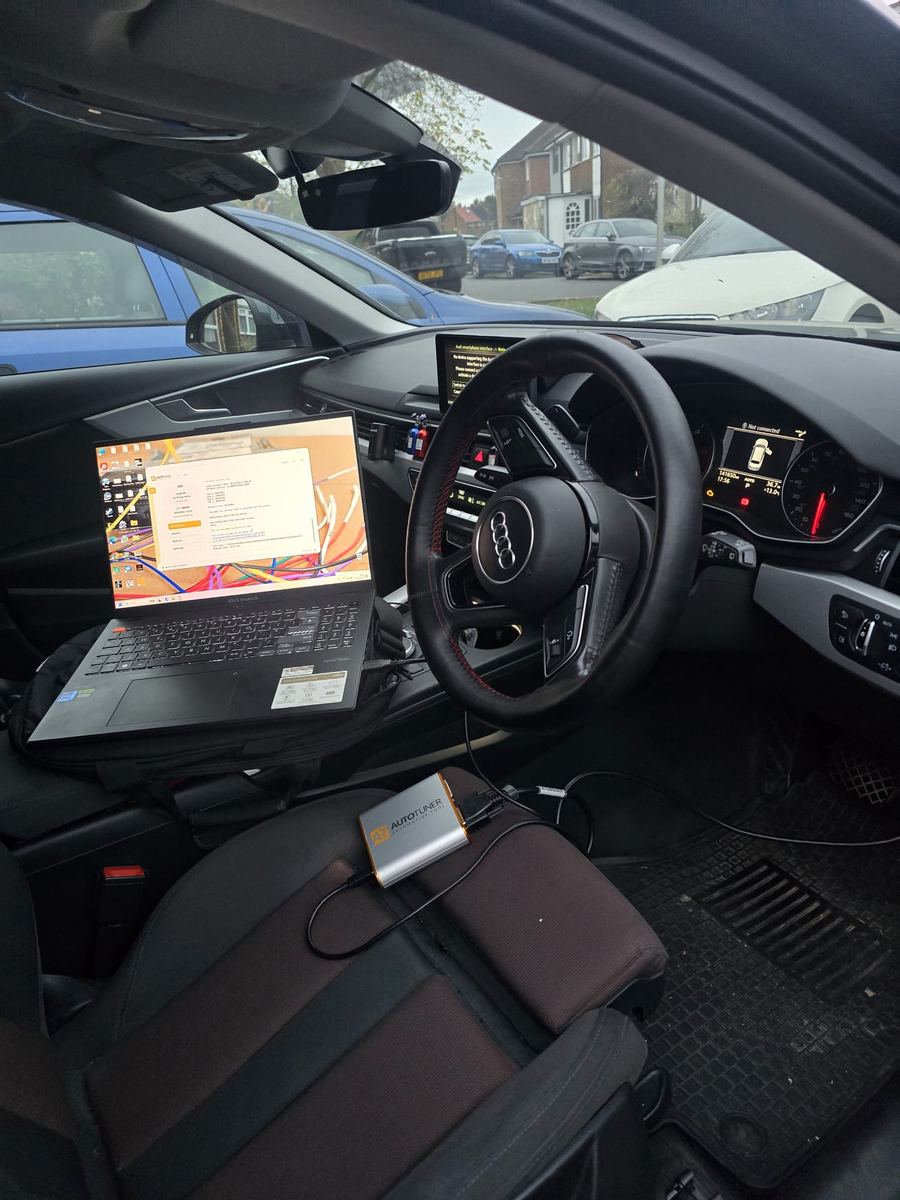


VW Passat Stage 1 remap: assess the whole powertrain before changing engine software
A Passat used for commuting, family travel or carrying work equipment needs a tuning decision based on its actual specification and condition. The badge alone cannot establish what software is suitable. This guide focuses on engine and transmission compatibility, maintenance evidence and the questions behind a responsible Stage 1 enquiry, rather than copying figures from another Passat or treating every version as the same vehicle.
Identify the engine, transmission and installed software together
Registration details begin the enquiry, but the proposed work depends on more than the model name. Supply the fuel type, transmission, known engine information and any changes made since manufacture. Mention replacement control units, an engine change or previous tuning even if the car now appears standard. An engine family shared with another vehicle does not prove that its calibration, cooling arrangements or transmission application are identical. A similar badge is not sufficient evidence of compatibility.
Ask what hardware and software identifiers must be checked before a proposal is confirmed. Manufacturer updates can change the installed software without changing the visible vehicle specification. If the tuning history is unknown, make that uncertainty explicit rather than relying on a seller’s claim. A supported engine type does not automatically mean every associated control unit or software revision can be programmed. The initial decision should remain conditional on identifying the actual combination and understanding any limitations before work is authorised.
Read maintenance history as evidence, not a assurance
Bring service records and explain unresolved concerns, including coolant loss, unusual oil use, rough running, smoke or recurring warnings. A recently serviced vehicle is not automatically ready for increased engine demand, because routine maintenance and fault investigation answer different questions. Equally, mileage by itself does not establish suitability or rule it out. The relevant assessment concerns the present condition, the maintenance requirements of the particular vehicle and any evidence of an existing problem.
Follow the exact handbook for owner checks and fluid specifications. Do not add an unapproved product, dismantle intake parts or clear a warning to make the car appear ready. Ask which baseline checks are proposed and what finding would lead to postponement. A weak response or hesitation should be investigated as a fault before being described as something a remap will fix. If the evidence suggests a mechanical or electrical issue, resolving it is a separate priority rather than an optional extra attached to the tuning request.
Give manual clutch symptoms their own place in the enquiry
For a manual Passat, describe any clutch slip, judder, difficult engagement or unusual driveline noise before discussing calibration. Do not perform a harsh acceleration test to discover how much the clutch will tolerate. Report symptoms that occurred during normal use and explain any relevant replacement history. A clutch that works under existing conditions does not provide a assurance about its behaviour after engine torque delivery changes.
Ask how the proposal accounts for the actual clutch and driveline rather than accepting a generic statement that Stage 1 is safe for every standard car. Where condition is uncertain, further inspection or retaining the current calibration may be appropriate. If components have been upgraded, provide the documentation rather than assuming the upgrade makes every tuning request suitable. Parts compatibility, installation quality and the rest of the vehicle still matter. The objective is an informed assessment, not finding a test severe enough to force a failure.
Need help with your car now?
A call-out fee applies; your quote confirms the full price.
Treat DSG and other automatic details as compatibility questions
If the car has an automatic transmission, identify the installed unit where known and provide its service history. Explain shuddering, delayed engagement, unexpected shifts or previous transmission work. Those observations can change the recommendation independently of engine tuning. Do not assume that all transmissions sold under a familiar name have identical hardware, control software or maintenance needs. An enquiry should establish the actual unit rather than infer it from the trim or exterior appearance.
Ask whether separate transmission software is proposed, why it would be relevant and whether it is supported for this car. It should not be treated as automatically included or as a way to conceal a mechanical problem. Engine and transmission control need to remain coherent, but that principle does not prove a particular package is compatible. Request a clear distinction between engine calibration, any transmission work and diagnostic investigation. If the combination cannot be assessed confidently, postponing the change is more useful than accepting an unexplained assurance about torque handling.
Include load, fuel and normal driving priorities
Explain how the Passat is actually used: lightly loaded commuting, carrying equipment, family travel or towing within its existing permitted limits. A remap does not increase the manufacturer’s towing, axle or vehicle weight limits. If towing is relevant, discuss it explicitly and retain the handbook’s guidance. Do not use additional engine response as a reason to carry more or ignore the condition of tyres, brakes and suspension. Those systems remain part of the vehicle’s overall suitability for its work.
Use the handbook’s fuel specification and ask whether the proposed calibration introduces a different requirement. Any requirement should be understood before authorisation, not discovered afterwards. Avoid assuming improved fuel economy, because journey conditions and driving behaviour can change consumption regardless of software. Describe the response you want during ordinary use rather than requesting a headline result from an online example. Smooth, predictable operation can be a more meaningful brief, but availability and the appropriate calibration still depend on the identified vehicle.
Keep emissions operation and fault diagnosis separate from tuning
A warning relating to emissions equipment is a reason to understand the fault, not an invitation to disable the system. Describe the message and relevant driving history accurately. Do not attempt to force a regeneration, remove components or use an additive on generic internet advice. Where the handbook provides owner instructions, follow only those applicable to the actual vehicle and warning. If the required conditions or safety implications are unclear, seek professional advice before continuing.
Ask how the proposed work retains functioning required emissions equipment and how existing faults will be handled before programming. Turning off a warning does not establish that its cause has been repaired. Likewise, a clean dashboard alone does not prove that the vehicle is suitable for tuning. The discussion should make room for lawful repair, further diagnosis or declining the work where appropriate. Stage 1 is a description of a proposed software change, not an exemption from roadworthiness, emissions requirements or the need to understand an unhealthy baseline.
Need help with your car now?
A call-out fee applies; your quote confirms the full price.
Clarify permissions, software records and future servicing
Check the proposed modification with your insurer before proceeding. Review any finance, lease, employer or warranty conditions relevant to the vehicle and obtain the necessary permission. A software change can have consequences even without visible hardware alterations. Do not assume another owner’s policy or experience applies to you. Restoring an earlier calibration does not assurance that the modification becomes undetectable or that every insurance, contractual or warranty consequence disappears.
Ask what software information and work record will be retained, particularly if the current file may already have been changed. Discuss how later manufacturer updates or control unit replacement would affect the situation. Reapplying an earlier tuning file should not be assumed appropriate after the installed software changes. Keep the records available for future servicing and tell a repairer about the modification when relevant. Clear history supports better decisions; concealing it can make a later fault investigation harder and encourage incorrect assumptions about the vehicle’s actual state.
Agree what completion can establish and what remains uncertain
Before programming, ask what assessment and verification are proposed for the identified powertrain. The explanation should connect the checks to this car and the agreed objective rather than rely on a list of technical terms. Some operating conditions cannot safely be reproduced at a parked location. Acknowledge that limitation and do not request aggressive demonstrations on public roads. An initial impression of stronger response is not a substitute for understanding what was checked and whether any concern remains.
At handover, confirm the work actually completed, applicable fuel advice and what to do if a warning or unusual behaviour appears. Keep the records with the service history and avoid repeatedly clearing faults to keep driving without advice. A responsible Passat Stage 1 decision may end with postponement, further diagnosis or retaining the standard software. The useful result is a defensible choice for the actual engine, transmission and intended use, not a promise that every Passat will accept the same file or deliver the same outcome.